Separate the damage from its cause
Render repairs in Knutsford | Damage and recurring defects
A damaged render surface does not always reveal the extent of the repair. An impact near a loading door, a cracked reveal or a patch that has failed twice may involve more than the visible coating. In Knutsford, a useful repair scope starts by identifying the cause and affected layers, then sets out compatible work and the intended appearance. It should not treat every defect as the same filling operation simply because all of them can be covered by a new colour.

On this page
Record the event or pattern that led to the damage
Where an impact occurred, note the location and what is known about the event without assuming the visible break is the full extent. Where there was no clear event, describe how the defect developed and whether it has changed. Earlier photographs and repair records can be particularly useful if the same area has failed before. They help the assessor understand the sequence rather than see only the latest patch.
Photographs should include the whole relevant elevation and a closer view from a safe position. They can explain the setting but do not replace inspection where concealed or elevated areas need assessment. If the wall itself may be unstable or significantly damaged, obtain the appropriate building advice before specifying a decorative repair. The finish contractor should not be expected to resolve an uncertain structural issue through material selection.
- Map the damage Tapping finds hollow areas; cracks and their likely cause are noted.
- Cut back Failed render is cut out to a sound edge, usually squared off.
- Fix the cause Leaking gutters, sills without drips or render below the DPC are dealt with.
- Rebuild in coats Using a material compatible with the surrounding render and masonry.
- Blend the finish Texture is matched; colour may need a coating over the wider area.
The usual order of work. The survey and the chosen products decide the actual steps.
Establish which layers are affected
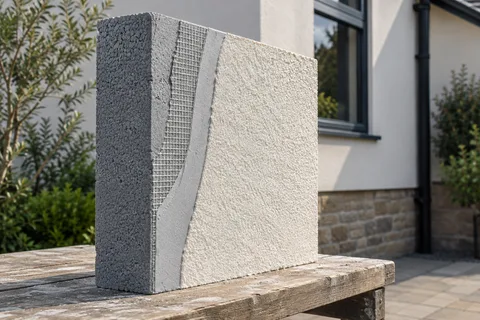
The visible render may sit directly on masonry or form part of a more complex assembly. External wall insulation introduces components that require system-specific assessment when damaged. A repairer needs to know that build-up rather than assume the wall is ordinary masonry behind a thin coat. Keep any existing product and installation records available for the survey.
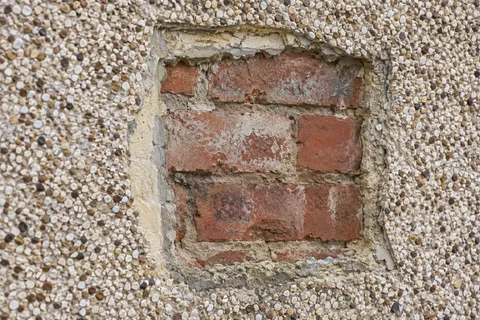
On a conventional rendered wall, detached areas can extend beyond the obvious crack or missing patch. Previous coatings may also hide repair boundaries. The assessment should identify sound retained material and the extent that needs intervention. That allows the repair to follow condition rather than the convenient outline of the visible mark.
Different materials within the same elevation may require different treatment. A hard patch beside traditional material can be incompatible even if its colour matches. Lime repair guidance may be relevant where older fabric is involved, with appropriate expertise to select the method. Stronger is not a sufficient specification when the surrounding construction has different properties.
| Observation | Relevant question |
|---|---|
| Impact damage | What is damaged beneath the visible finish? |
| Crack at an opening | What is happening at the frame and background junction? |
| Repeated staining | Is an active water source still present? |
| Recurring patch failure | Did the earlier method address the actual cause? |
| Damage to an insulated wall | Which system layers require assessment? |
Address the cause before repeating the finish
If a bracket, door movement or vehicle route contributes to repeated damage, the wider arrangement may need attention. The render repair should connect to that work rather than restore the same vulnerable detail without discussion. The relevant designer or specialist should resolve the attachment or operational issue where it falls outside ordinary surface repair.
Water-related defects need the same discipline. A leaking downpipe or incomplete sill detail can continue affecting a new patch. The relevant trade should identify and complete the necessary correction, with the repair programme coordinated around it. A coating that initially hides the stain does not demonstrate that the source has been removed.
For commercial buildings, responsibility may sit with a maintenance team, vehicle operator or another contractor as well as the rendering specialist. Keep the tasks explicit. A clear record of cause, repair and related changes is more useful than repeatedly commissioning an isolated patch with no reference to the earlier failure.
Agree the visual extent separately
A compatible local repair may remain visible within an aged elevation. Grain, plane and weathering all influence the match. Discuss whether the expected outcome is a sound local repair, a broader compatible colour coating or replacement to a natural boundary. These are different scopes and should be priced accordingly.
A sample or trial can help establish the appearance, but it should be judged at the stage appropriate to the material. Fresh repairs may not represent the final dry or decorated result. Equally, a promise to wait should not replace assessment of a genuine physical defect. The agreed specification should identify what remains to be done and when the relevant review takes place.
Where defects are widespread, a fuller wall refurbishment may be worth comparing. That decision should follow the condition and intended result, not an automatic assumption that a larger contract is better. Retaining sound material can be appropriate, provided the selected repair and finishing approach suit the actual wall.


Plan access and the return to normal use
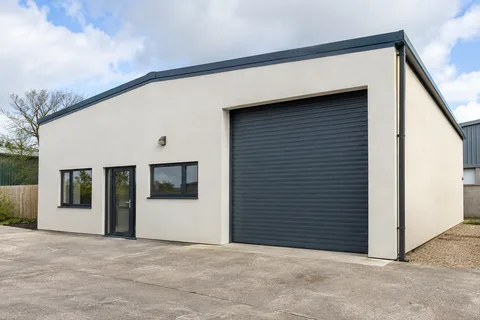
The repair method may require removal, protection and a period before the area is ready for subsequent treatment. The working arrangement should suit those operations. Around an entrance or loading area, identify necessary restrictions and a safe separation from normal use. A small repair should not be assumed risk-free merely because its measured area is limited.
Coordinate specialist fittings and other trades so the repaired surface is not immediately disturbed. On a whole-house project, include repairs as a defined stage before broad decoration. On working premises, agree when equipment or routes can return to their normal arrangement in accordance with the actual work, rather than a generic promise that the patch will be finished immediately.
Keep a repair record that can answer the next question
Retain the location, material, date and relevant findings, plus any broader coating or associated alteration. A marked photograph can make a short record useful. If the same area changes again, the next assessor can see what was done and why, instead of starting from a visible surface that conceals every previous decision.
The purpose is a repair that is suitable for the affected construction and an appearance understood by the owner. Separating cause, technical method and decorative extent makes that result clearer, whether the job concerns a small house patch or damage beside a busy commercial opening.
Common questions
Can impact damage be treated as a cosmetic patch?
Only after the extent is assessed. Damage can affect the background, supporting components or an insulated system as well as the visible finish. The repair specification should follow what is actually affected, with appropriate specialist input where required.
Will repaired render match the existing wall exactly?
That cannot be assumed. Weathering, grain and different materials can leave a patch visible. Agree the technical repair first and any broader decorative treatment separately, using a sample where useful to establish a realistic appearance expectation.
See housing and planning information for Knutsford and nearby places, including the source and geography behind each figure.