Repairing an operational interface
Render repairs around loading doors and impact damage
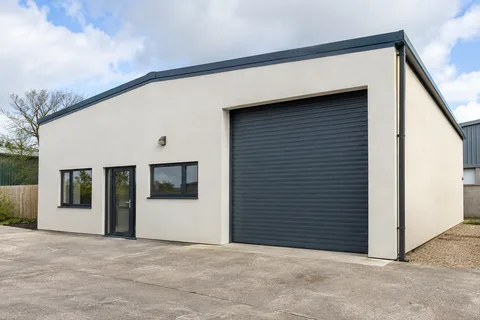
Damage beside a loading door is often described by the visible result: a chipped corner, broken render or a crack around the frame. The repair needs to consider what happened beneath and beside that surface as well. A loading opening is an operational interface, so the door, wall system and normal use can all affect the scope. Before selecting a patching material, establish the affected construction and whether the cause needs a separate response.

On this page
Describe the event and the location accurately
For a Knutsford commercial façade, useful starting information includes the position of the damage, what is known about the event and whether the same location has been repaired before. Keep observations distinct from assumptions. A mark that appears consistent with impact does not reveal every affected layer, and a crack noticed after an event may still require assessment of the wider construction.
Photographs should show the full opening and the damaged area from safe accessible positions. Include the relation to the door, frame, returns and adjoining wall. A close-up alone can make a small defect difficult to locate and conceal the practical setting. If elevated or concealed areas need inspection, arrange appropriate access rather than improvising a way to reach them.
Where there is concern about stability, the door assembly or other significant building damage, obtain the relevant competent advice before treating the matter as ordinary render repair. A decorative contractor should not be expected to certify an uncertain structural or mechanical condition by filling over the visible break.
Identify the wall system behind the finish
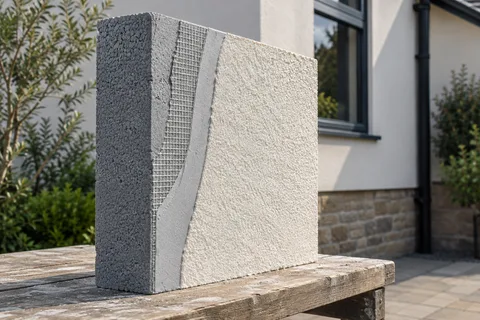
The render may sit on masonry, a specified board system or an external wall insulation assembly. Those are different repair contexts. Existing installation information can help identify the build-up and the appropriate source of technical guidance. If it is not known, the assessment should resolve what is necessary before selecting the repair method.
An insulated wall can contain affected components beneath an apparently local surface break. A patch that restores colour without addressing those layers may leave the system incomplete. Conversely, the assessment may show that the appropriate repair is limited. The extent should follow the finding rather than an assumption that every impact either requires a whole new façade or can be hidden by paint.
Review the opening and adjoining details
The junction between render and frame needs to remain suitable after repair. Identify any disturbed components, movement requirements and weathering details through the appropriate project or specialist advice. The door should operate as intended without the repair creating an obstruction or concealing an access point. These matters should be considered alongside the surface finish rather than discovered at completion.
If the door or frame is due to be replaced, coordinate the sequence. Repairing the surrounding render immediately before removal of the assembly may lead to avoidable damage and repeated work. The relevant trades should share the intended final detail and the condition in which each hands over to the next. A clear scope prevents the renderer inheriting an unfinished interface under a vague instruction to make good.
The commercial rendering guide explains the wider package responsibilities. Around one opening, those principles can be applied concisely: identify each affected component, its responsible trade and the stage at which it is checked. The size of the repair does not make the interface less important.
| Question | Why it matters |
|---|---|
| What was struck or disturbed? | The visible render may be only one affected component |
| What is behind the finish? | Masonry and insulated systems require different assessment |
| Does the door interface remain suitable? | Operation and weathering need their own review |
| Could the same damage recur? | The wider cause may need a separate change |
| What appearance is expected? | Local repair and broad decoration are different scopes |
Address recurrence separately from the patch
If similar damage has happened before, review the cause with the people responsible for the building's operation. The necessary response may concern vehicle routes, equipment, protection or the arrangement around the opening. Those decisions need appropriate expertise and should not be improvised as part of a decorative repair visit. Restoring the finish alone does not change the activity that repeatedly damages it.
Keep any agreed alteration connected to the repair programme. A new protective component or changed fitting may affect the wall detail and the order of work. The renderer needs the final arrangement before completing the surface around it. Otherwise, the repaired area can be disturbed immediately for an alteration that was always intended but not communicated.
Define a compatible repair and a realistic appearance
The render repair specification should suit the installed system and the assessed damage. Identify which material is removed, which layers are reinstated and how the junction is completed. Where the original system is known, use technical information relevant to it. A generic stronger patch is not an adequate answer to compatibility or an uncertain background.
Appearance is a separate part of the agreement. A new patch can differ from an aged elevation through grain, plane or colour. If a broader uniform appearance is required, a suitable coating or a larger finishing boundary may be considered after the technical repair. That should be described as additional work, not assumed to be included in every local repair price.
Use a sample or trial where it can clarify the intended result. Review it at the appropriate stage for the product rather than judge a fresh patch as though it were fully finished. At the same time, physical defects should not be dismissed indefinitely as colour changes that will settle. The review should distinguish material condition from visual expectation.


Plan the work around the opening's use
The loading door may need temporary restriction while assessment or repair takes place. Identify the work zone, alternative arrangements and the person managing access. The contractor and operator should agree the sequence rather than rely on moving tools whenever a vehicle arrives. Suitable separation and competent access planning remain necessary even for a relatively small patch.
The work plan should account for the stages before the area is ready to return to normal use. Product requirements, protection and outstanding specialist work may affect that timing. A visually neat surface is not necessarily evidence that every component is ready for ordinary operation. The responsible parties should confirm the relevant stage before restrictions are changed.
The building operator also needs to know the limits of the repair area during the work. A temporarily unavailable door can affect the use of neighbouring doors or routes, and that change should be coordinated rather than left to individual drivers. If the repair uncovers a wider defect, communicate the revised scope and access implications before promising a reopening time. The practical aim is one current arrangement that both the contractor and operator understand, including who can authorise a change when the assessed conditions permit it.
Retain a clear repair history
Keep the location, date, known event, assessed findings and completed method. Add any related change intended to reduce recurrence and the relevant fitting or system information. A marked elevation and a few labelled photographs can make the record useful without creating unnecessary volume. Future assessors can then see more than the latest colour covering earlier work.
For a wider wall refurbishment, preserve the loading-door repair as a distinct area within the final record. It may have a different history and specification from the open face beside it. The result should restore the affected façade appropriately while leaving the owner clear about what the repair did, what separate causes were addressed and what appearance was agreed.
Common questions
Can the repair be limited to the broken surface?
Only if assessment establishes that the affected construction and suitable repair extent are limited to that area. Impact can affect underlying layers or adjoining components. The method should follow the actual damage, with relevant specialist input where the wall or door assembly is involved.
Does repairing the render solve a recurring vehicle impact problem?
No. The repair restores the affected façade but does not by itself change vehicle movements, equipment or the vulnerability of the location. Any necessary operational or protective design should be considered separately by the responsible people, then coordinated with the wall repair.
See housing and planning information for Knutsford and nearby places, including the source and geography behind each figure.